Catherine the Great: Architect of Russia’s Enlightened Empire
Catherine II of Russia, widely known as Catherine the Great, stands as one of the most influential monarchs in European history. Ruling from 1762 to 1796, she transformed Russia into a formidable political, cultural, and intellectual force. Her reign was marked by territorial expansion, legal reform, patronage of the arts, and efforts to modernize society along Enlightenment ideals. Although her rule was not without contradictions or limitations, Catherine’s leadership reshaped the Russian Empire and left an enduring legacy.
Catherine was not born Russian. Born Sophie Friederike Auguste von Anhalt‑Zerbst in Stettin, Prussia (now Szczecin, Poland), in 1729, she entered Russian history through marriage to the future emperor Peter III. Intelligent, ambitious, and politically astute, she quickly mastered the Russian language, converted to Orthodoxy, and aligned herself with factions dissatisfied with Peter’s erratic leadership. In 1762, after only six months of Peter’s rule, a coup d’état led by Catherine’s allies forced his abdication, and she was proclaimed Empress of Russia. Her ability to seize and maintain power in a vast, diverse empire demonstrated the political skill that would define her reign.
One of Catherine’s greatest ambitions was to Westernize Russia in the spirit of the Enlightenment. She corresponded with leading thinkers such as Voltaire and Diderot, admiring their ideas about reason, education, and humane governance. Inspired by Enlightenment ideals, she convened a legislative commission in 1767 to create a new law code. Her Nakaz (or “Instruction”), a sweeping document outlining her political philosophy, condemned torture, advocated equality before the law, and supported limited legal rights for serfs. Although the commission ultimately dissolved without major legal changes, the Nakaz stands as a remarkable attempt to integrate Enlightenment theory into Russian political life.
Despite her intellectual commitments, Catherine remained pragmatic in matters of power and social stability—sometimes contradicting the reforms she envisioned. Nowhere is this more evident than in her policies on serfdom. While she recognized the injustices of the system, she also relied heavily on the nobility for political support. Under her rule, serfdom actually expanded, and landowners gained greater control over the rural population. The limitations of her reformist ambitions became clear during the Pugachev Rebellion of 1773–1775, a massive uprising of peasants, Cossacks, and serfs led by Yemelyan Pugachev, who falsely claimed to be the deceased Peter III. The revolt deeply shook Catherine and convinced her that swift, dramatic social reform could threaten imperial stability. From that point forward, she prioritized order over idealism.
Beyond domestic policy, Catherine’s reign is distinguished by significant territorial expansion. Through a series of military campaigns and diplomatic maneuvers, Russia gained control of territories that reshaped the geopolitical landscape of Eastern Europe. Under Catherine, Russia participated in the partitions of Poland (1772, 1793, and 1795), acquiring vast western lands and becoming a major power in European affairs. In the south, successful wars against the Ottoman Empire secured access to the Black Sea and opened new opportunities for trade and naval power. These expansions not only increased Russia’s size but also bolstered its influence and strategic position.
Catherine was equally influential in shaping Russia’s cultural identity. She sought to position Russia as a center of learning and the arts, founding institutions such as the Smolny Institute for Noble Maidens, one of the first state-funded schools for girls in Europe, and the Hermitage Museum, which began as her personal art collection. By inviting artists, architects, and scholars from across Europe, she helped create an environment where Russian literature, theater, and visual arts could flourish. Her reign marked the beginning of Russia’s cultural “Golden Age,” setting the stage for future achievements in the 19th century.
In addition to her cultural achievements, Catherine was known for her energetic involvement in political administration. She reorganized provincial government, introduced new processes for tax collection and census-taking, and attempted to standardize administration across the empire. Though not all reforms were equally successful, they laid groundwork for later modernization.
Catherine’s political life was intertwined with a complex personal life, including her longstanding relationships with several influential men, many of whom served as advisors or held prominent government positions. While these relationships became subjects of gossip and legend—often exaggerated—they also reveal Catherine’s ability to use personal alliances to further political objectives and reward loyal supporters.
By the time of her death in 1796, Catherine the Great had transformed Russia. She had expanded its borders, strengthened its global influence, and initiated cultural and intellectual developments that reshaped Russian society. Yet she also left behind contradictions: a ruler inspired by Enlightenment ideals who nevertheless reinforced autocratic power and presided over the deepening oppression of serfs. These complexities make her one of history’s most fascinating figures.
In conclusion, Catherine the Great’s reign was a pivotal chapter in Russia’s development. Her efforts to modernize the empire, her patronage of the arts, and her expansionist foreign policy profoundly influenced the course of Russian and European history. Although her reforms were limited by political realities and her own priorities, her legacy as a powerful, transformative leader endures. Catherine remains a symbol of both the promise and contradictions of enlightened absolutism, embodying the challenges of ruling an empire on the edge of modernity.
Above is an AI-generated essay on Catherine the Great. I simply asked Microsoft Copilot to “write a 2 page essay on Catherine the Great of Russia,” and this is what it gave me. I then asked it to “format this in chicago style” and it produced this:
Catherine the Great: Architect of Russia’s Enlightened Empire
Your Name
Course Title
Instructor’s Name
DateCatherine the Great: Architect of Russia’s Enlightened Empire
Catherine II of Russia, widely known as Catherine the Great, stands as one of the most influential monarchs in European history. Ruling from 1762 to 1796, she transformed Russia into a formidable political, cultural, and intellectual force. Her reign was marked by territorial expansion, legal reform, patronage of the arts, and efforts to modernize society along Enlightenment ideals. Although her rule was not without contradictions or limitations, Catherine’s leadership reshaped the Russian Empire and left an enduring legacy.
Catherine was not born Russian. Born Sophie Friederike Auguste von Anhalt‑Zerbst in Stettin, Prussia (now Szczecin, Poland) in 1729, she entered Russian history through marriage to the future emperor Peter III. Intelligent, ambitious, and politically astute, she quickly mastered the Russian language, converted to Orthodoxy, and aligned herself with factions dissatisfied with Peter’s erratic leadership. In 1762, after only six months of Peter’s rule, a coup d’état led by Catherine’s allies forced his abdication, and she was proclaimed Empress of Russia. Her ability to seize and maintain power in a vast, diverse empire demonstrated the political skill that would define her reign.
One of Catherine’s greatest ambitions was to Westernize Russia in the spirit of the Enlightenment. She corresponded with leading thinkers such as Voltaire and Diderot, admiring their ideas about reason, education, and humane governance. Inspired by Enlightenment ideals, she convened a legislative commission in 1767 to create a new law code. Her Nakaz (or “Instruction”), a sweeping document outlining her political philosophy, condemned torture, advocated equality before the law, and supported limited legal rights for serfs. Although the commission ultimately dissolved without major legal changes, the Nakaz stands as a remarkable attempt to integrate Enlightenment theory into Russian political life.
Despite her intellectual commitments, Catherine remained pragmatic in matters of power and social stability—sometimes contradicting the reforms she envisioned. Nowhere is this more evident than in her policies on serfdom. While she recognized the injustices of the system, she also relied heavily on the nobility for political support. Under her rule, serfdom actually expanded, and landowners gained greater control over the rural population. The limitations of her reformist ambitions became clear during the Pugachev Rebellion of 1773–1775, a massive uprising of peasants, Cossacks, and serfs led by Yemelyan Pugachev, who falsely claimed to be the deceased Peter III. The revolt deeply shook Catherine and convinced her that swift, dramatic social reform could threaten imperial stability. From that point forward, she prioritized order over idealism.
Beyond domestic policy, Catherine’s reign is distinguished by significant territorial expansion. Through a series of military campaigns and diplomatic maneuvers, Russia gained control of territories that reshaped the geopolitical landscape of Eastern Europe. Under Catherine, Russia participated in the partitions of Poland (1772, 1793, and 1795), acquiring vast western lands and becoming a major power in European affairs. In the south, successful wars against the Ottoman Empire secured access to the Black Sea and opened new opportunities for trade and naval power. These expansions not only increased Russia’s size but also bolstered its influence and strategic position.
Catherine was equally influential in shaping Russia’s cultural identity. She sought to position Russia as a center of learning and the arts, founding institutions such as the Smolny Institute for Noble Maidens—one of the first state‑funded schools for girls in Europe—and the Hermitage Museum, which began as her personal art collection. By inviting artists, architects, and scholars from across Europe, she helped create an environment where Russian literature, theater, and visual arts could flourish. Her reign marked the beginning of Russia’s cultural “Golden Age,” setting the stage for future achievements in the nineteenth century.
In addition to her cultural achievements, Catherine was known for her energetic involvement in political administration. She reorganized provincial government, introduced new processes for tax collection and census‑taking, and attempted to standardize administration across the empire. Though not all reforms were equally successful, they laid groundwork for later modernization.
By the time of her death in 1796, Catherine the Great had transformed Russia. She had expanded its borders, strengthened its global influence, and initiated cultural and intellectual developments that reshaped Russian society. Yet she also left behind contradictions: a ruler inspired by Enlightenment ideals who nevertheless reinforced autocratic power and presided over the deepening oppression of serfs. These complexities make her one of history’s most fascinating figures.
In conclusion, Catherine the Great’s reign was a pivotal chapter in Russia’s development. Her efforts to modernize the empire, her patronage of the arts, and her expansionist foreign policy profoundly influenced the course of Russian and European history. Although her reforms were limited by political realities and her own priorities, her legacy as a powerful, transformative leader endures. Catherine remains a symbol of both the promise and contradictions of enlightened absolutism, embodying the challenges of ruling an empire on the edge of modernity.
Bibliography (Chicago Style)
Massie, Robert K. Catherine the Great: Portrait of a Woman. New York: Random House, 2011.
Raeff, Marc. The Well‑Ordered Police State: Social and Institutional Change Through Law in the Germanies and Russia, 1600–1800. New Haven: Yale University Press, 1983.
Simon, Gerhard. Russia in the Age of Catherine the Great. New York: Cambridge University Press, 1990.
There is no difference in the essay’s text, but the formatting adheres to the Chicago style, including the bibliography. I also asked where it obtained these sources, and it broke down three of the most commonly used books on Catherine the Great and her time ruling Russia, providing a quick bullet-point synopsis of each. While the essay produced was well written and provides a good amount of detail summed up, it still does not read as human. When I read even the most well-known and highly influential history books, I can still catch human errors, such as unclear sentence structure, or I have to reread a sentence or paragraph to ensure that I understand the author’s meaning. With AI, it plays into an idea that everyone has the same knowledge base going into reading an essay. There is no nuance to be found here or use of evidence to promote an argument. In other words, this essay was too easy to understand and did not make me think or have questions about one of Russia’s formidable female monarchs. Now, I did not instruct AI to give me a complicated essay, so the algorithm most likely follows what best practice is, and that is writing for an audience with an education similar to that of a ninth grader. I say all of this as a history student who does not use nor like AI and pushes myself to write in challenging ways. Someone who has used AI or has read more AI-produced work may have a completely different opinion. I think that the fact that you can even ask a computer, not another person, to write an entire essay for you is damaging to the future of work ethic and intellect. When people say that they ask AI to write an essay for them simply to “compare it against their own work,” I lose credibility in them as a writer. This may be similar to asking a classmate if you can read their essay, but it is not reading human writing. The two writing styles are incomparable because one is always going to follow the rules of grammar and writing perfectly (AI), and one is going to have new ideas and a complex or imperfect writing style (human).
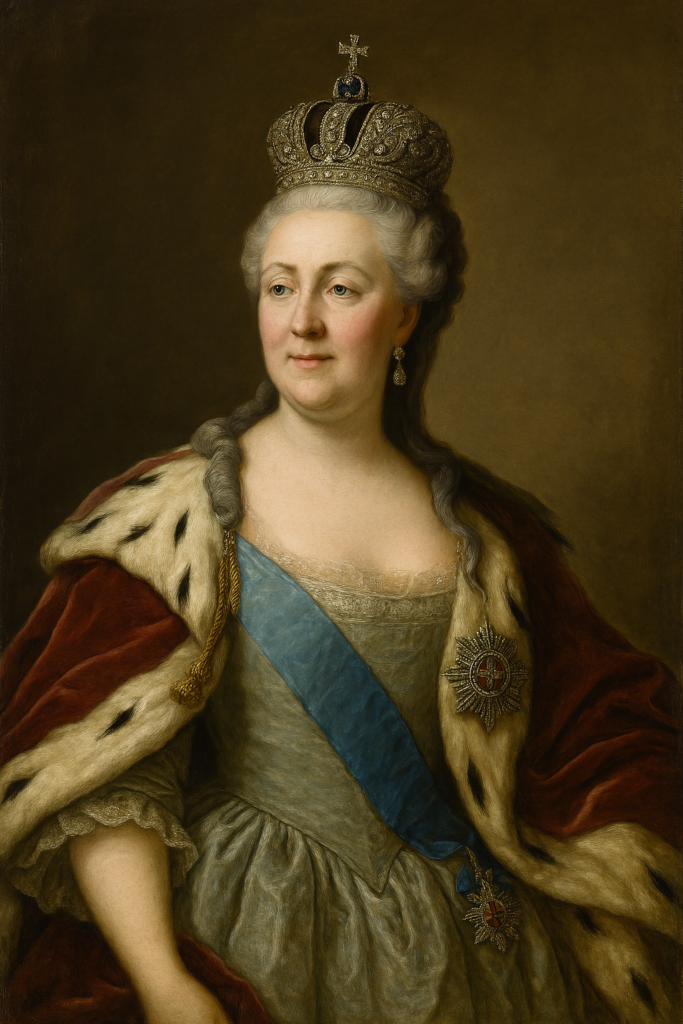
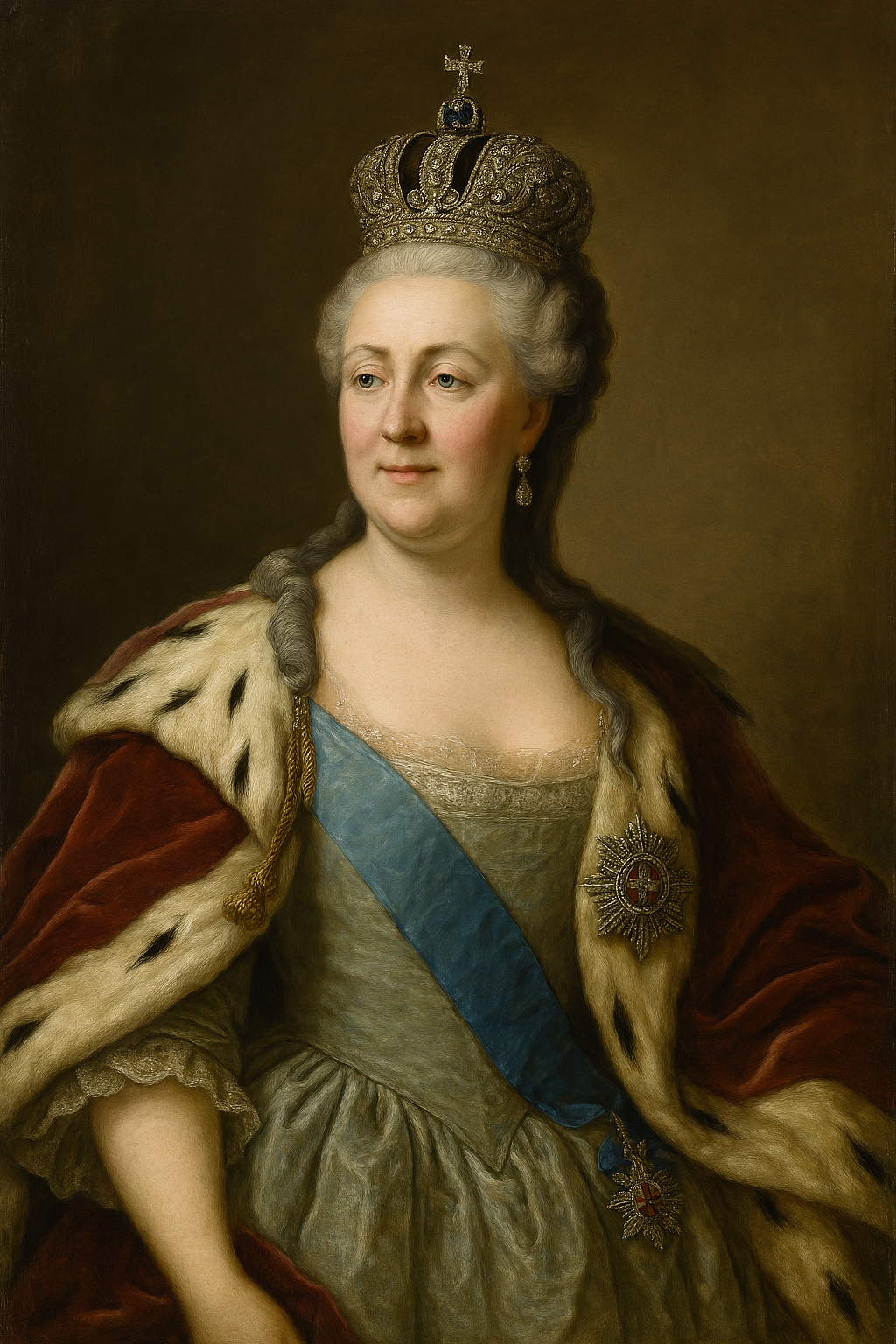
This is what AI gave me when I asked it to “create an image of Catherine the Great.” It looks like a very well-preserved oil painting of a woman from the eighteenth century. It looks similar to other portraits of the monarch, but again, the giveaway is that it is too perfect. There are no lines from the canvas, the sash looks to blend into the dress, and the strokes are too even. When I asked “what sources did you pull from to create an accurate image,” it replied with three different sources: “public‑domain historical art styles, general descriptions of Catherine the Great from historical records, and a mixture of licensed, publicly available, and human‑created training data.” So this image is from a mashup of different descriptions and images, making it even less reliable and fictional. Painting of Catherine from life can even be an embellishment to flatter the Tsarina or to sway the opinion of the public. AI-generated images will never hold the meaning or power of a real image, even if someone is just curious, because it does not have the human flair or the importance of what to include or not, because AI can cram many descriptions into one painting. Artists have to decide what to include, which speaks to the artist, audience, and subject, adding to the historical narrative and record.
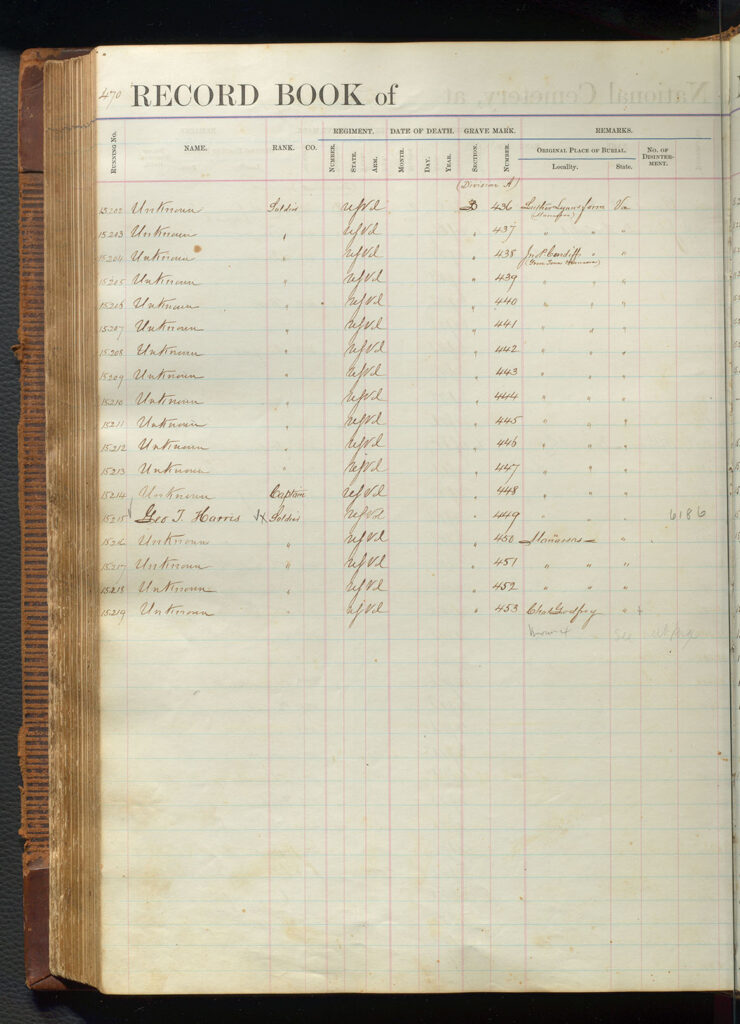
This is the page I had Google Gemini transcribe, and as someone who is not confident in their ability to read cursive, I think this is a helpful tool for checking your understanding of what you have read. However, it can also be misleading, and this page was fairly simple to transcribe, as half the words on the page are the same word repeated. I do like the fact that it produced the information in the same format, so in columns and rows, which made it easier for me to find what AI had transcribed on the page. The analysis portion is helpful, but it defeats the need to go out and do more research to actually understand what is going on on the page.